First Fire Damage Restoration provides emergency fire damage restoration in los angeles to stabilize compromised structures, extract firefighting water, and remediate acidic smoke deposits. Municipal firefighting actions from Los Angeles Fire Department units frequently leave thousands of gallons of water alongside charred building materials, requiring immediate dual-phase mitigation.
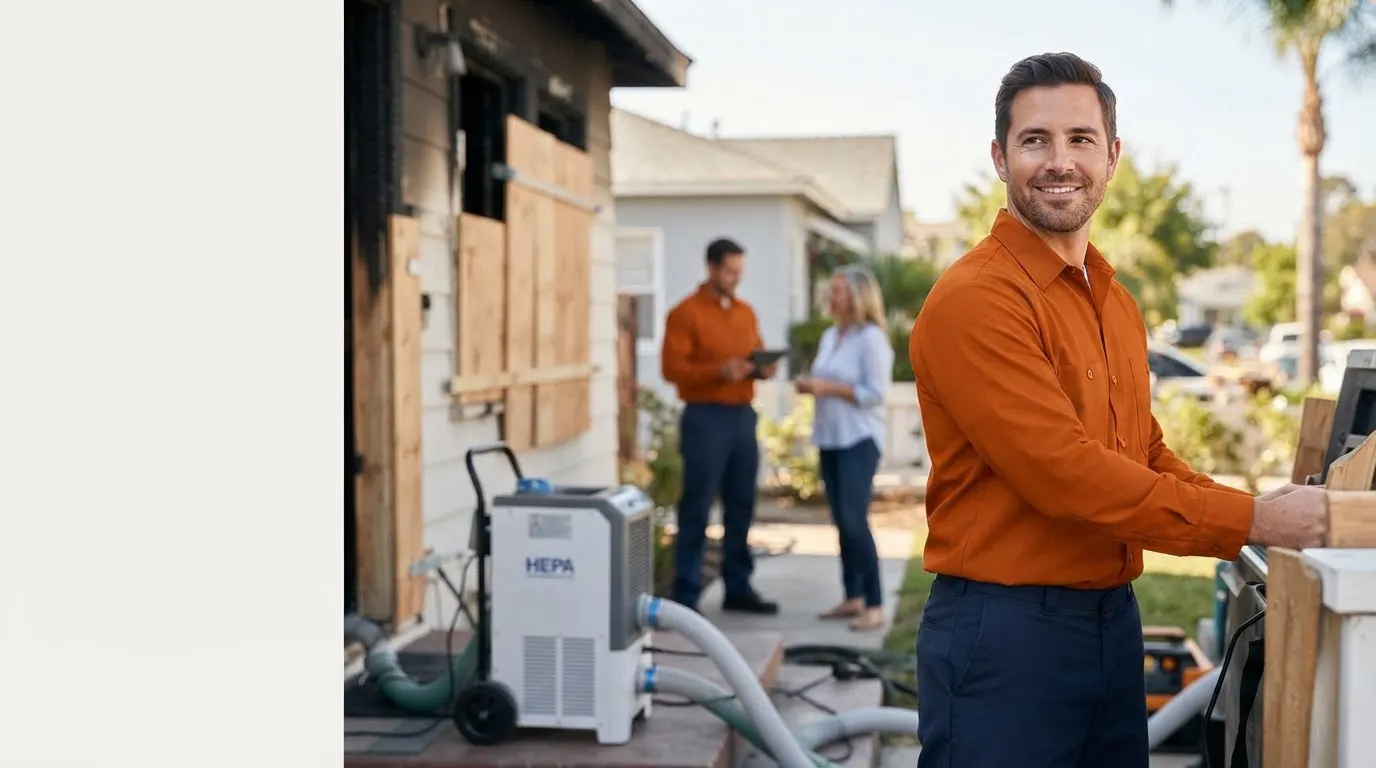
Fire damage restoration company in los angeles is an emergency structural recovery and remediation service that secures burned properties, extracts firefighting water, neutralizes corrosive soot residues, and eliminates toxic smoke odor across residential and commercial buildings.
Every service reflects the same meticulous attention to detail, whether it's a single job or a larger fire damage restoration project across los angeles.
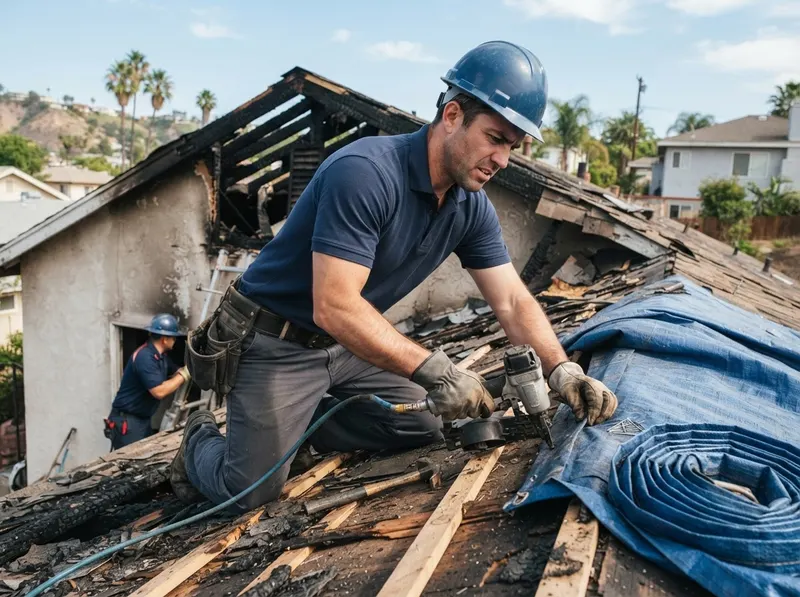
Securing breached building envelopes immediately following fire extinguishment prevents unauthorized site entry, structural weather damage, and secondary asset loss. Crews seal blown-out windows, compromised exterior doorways, and ventilation cuts made by fire crews using heavy structural plywood, framing braces, and exterior-grade 20-mil polymer roof tarps anchored to withstand coastal and canyon wind events. Our technicians install heavy-duty tamper-resistant exterior fasteners and 2x4 interior bracing systems that protect fire-weakened entryways without compromising remaining architectural framing. Sawn roof ventilation openings created by municipal firefighters are capped with framed wooden curb collars before weather-resistant poly membranes are installed, preventing rain runoff from penetrating attic spaces and accelerating gypsum ceiling collapses across lower floors.
Get a quote →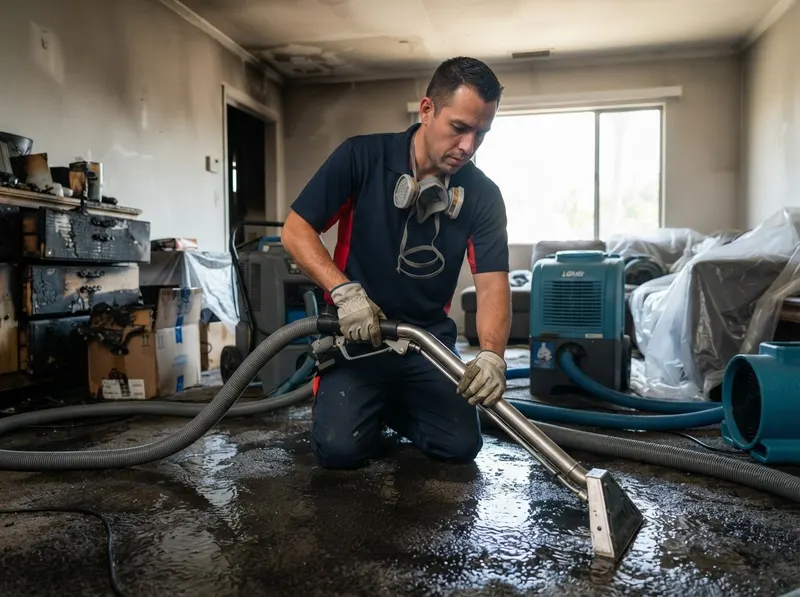
Municipal suppression hoses pump thousands of gallons into a burning structure, leaving standing water saturated with toxic combustion residues. High-volume submersible pumps and truck-mounted vacuum units extract stagnant moisture from flooring assemblies, wall cavities, and subfloors before industrial desiccant dehumidifiers and air movers stabilize relative indoor humidity below 50 percent. Technicians continuously track structural drying using invasive penetrating pin meters and non-destructive surface capacitance scanners to map deep moisture trapped beneath engineered subflooring, interior wall cavities, and tiled bathrooms. Rapid moisture reduction halts progressive swelling across framing members, stops secondary floor buckling, and neutralizes the optimal window for black mold propagation in warm, waterlogged ceiling cavities.
Get a quote →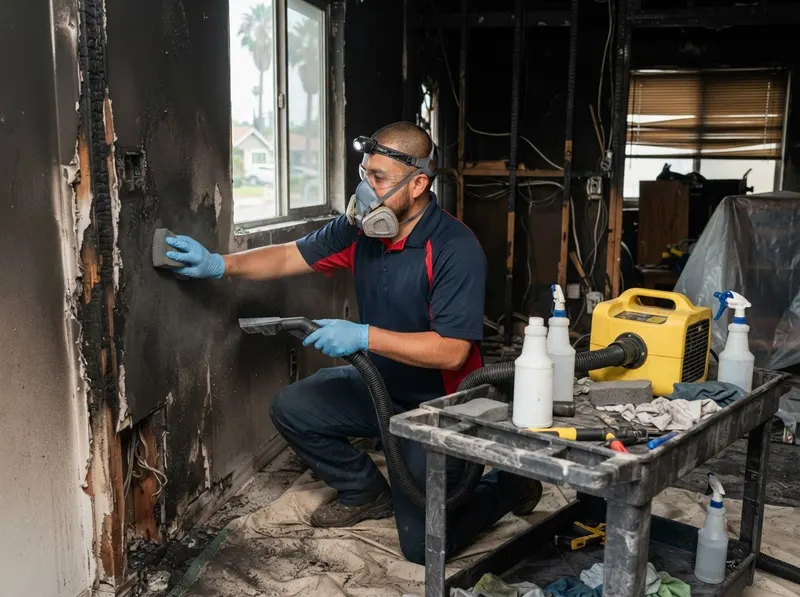
Burned plastics, drywall, and synthetic finishes generate corrosive soot deposits that etch porcelain, pit metals, and permanently discolor painted surfaces within 72 hours. Remediation specialists identify whether the soot is oily, dry, or protein-based, deploying chemical dry-cleaning sponges, HEPA-filtered vacuuming, and specialized alkaline washes to neutralize acidic residues safely. Specialized alkaline restoration formulations are applied with micro-fiber agitation tools across delicate finished woodwork, polished marble counters, and painted acoustic ceilings to dissolve corrosive soot binders. Unchecked acidic soot actively corrodes electronic contact switches, plumbing fixtures, and structural fasteners, making fast physical extraction and chemical balance restoration crucial within the initial hours post-extinguishment.
Get a quote →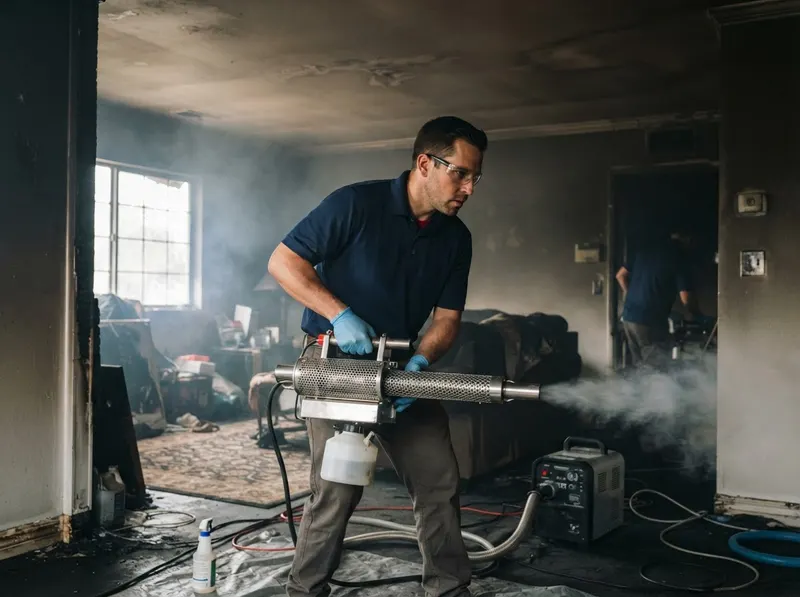
Microscopic smoke particles penetrate deep into framing studs, concrete subfloors, and interstitial insulation layers, off-gassing carcinogenic smells long after flames disappear. Industrial hydroxyl generators safely break down airborne volatile organic compounds during active site occupancy, followed by solvent-based thermal fogging that penetrates porous building substrates to permanently dismantle smoke odor molecules. Thermal fogging formulas vaporize hydrocarbon neutralizers into fine aerosol droplets measuring 0.5 to 2 microns in diameter, mirroring the exact penetration depth of combustion gases within porous brickwork, Douglas fir framing, and concrete slabs. This comprehensive dual-phase process eliminates toxic indoor air contaminants, eradicates stubborn burnt acrolein odors, and avoids transient cosmetic fragrance masks.
Get a quote →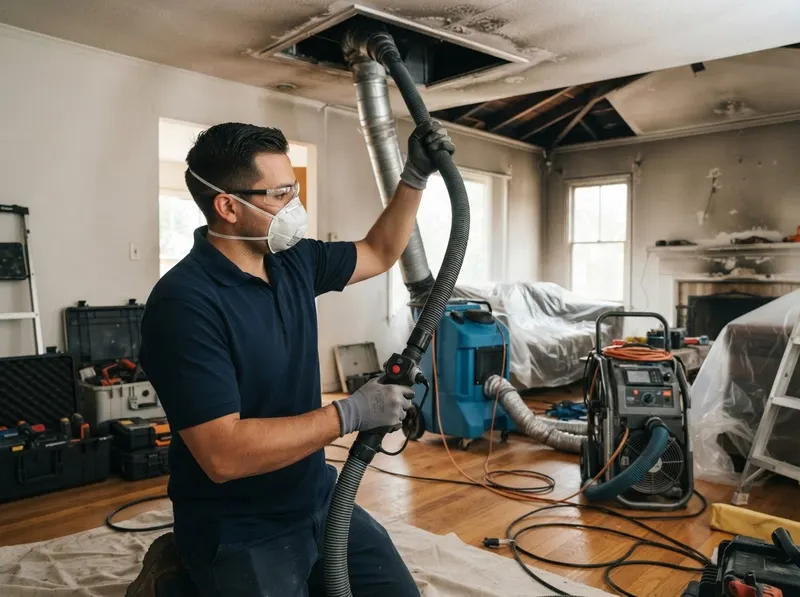
Forced-air ventilation systems pull heavy smoke and airborne soot throughout a structure during a combustion incident, distributing toxic particles across unburned rooms. Technicians seal off duct registers, deploy negative air machines equipped with medical-grade HEPA filters to scrub indoor air continuously, and mechanically clean interior ductwork using rotobrush systems and EPA-registered antimicrobial sealants. Supply and return plenums undergo high-pressure air agitation, industrial vacuum extraction, and internal inspection with lighted fiber-optic borescopes to guarantee zero soot traces linger within thermal insulation liners. Cleaning and encapsulating internal air pathways prevents mechanical systems from recirculating carcinogenic particulate matter, carbon soot, and burned plastic ash upon building mechanical restart.
Get a quote →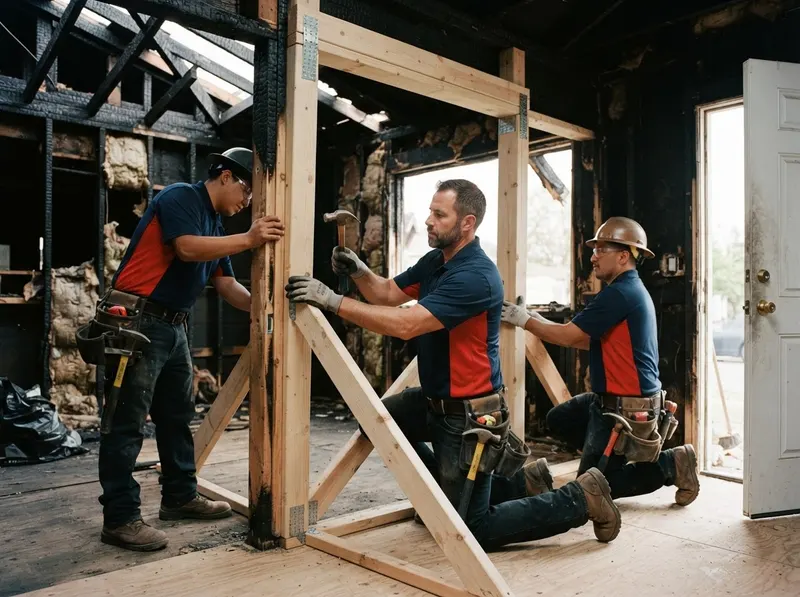
Load-bearing joists, ceiling rafters, and wall studs compromised by flame impingement present immediate structural collapse hazards for inspection teams and occupants. Skilled restoration carpenters erect heavy timber shoring posts, temporary load-bearing support walls, and metal jacks to mechanically relieve structural stress points, restoring safe access for public adjusters and structural engineers. Technicians systematically inspect cross-beams, exterior shear panels, and roof truss connection plates for carbon charring, checking load deflection thresholds against local municipal building codes. Stabilizing compromised structural loads early preserves salvageable architectural elements, mitigates dangerous ceiling fall hazards, and safely facilitates comprehensive forensic damage mapping.
Get a quote →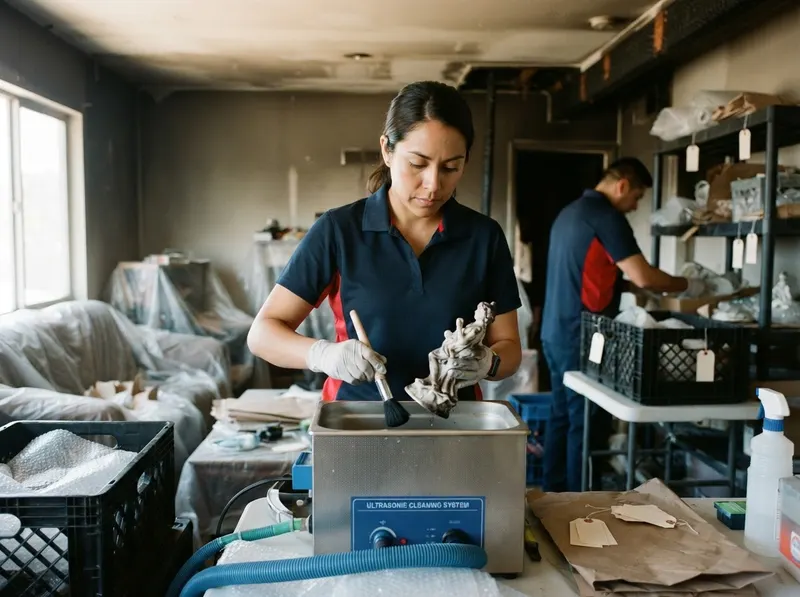
Salvageable personal property, delicate textiles, fine electronics, and business documents require rapid relocation away from corrosive indoor soot atmospheres. Items are systematically inventoried using digital asset tracking barcodes, packed in secure protective containers, and moved to climate-controlled processing facilities for precision ultrasonic cleaning, ozone chamber deodorization, and secure vault storage. Sensitive items such as computational hardware, circuit assemblies, and commercial tools are washed in cavitation tanks filled with non-conductive ultrasonic cleaning fluids that strip microscopic soot from delicate electronic micro-components. Cleaned items are stored in climate-monitored, secure storage units until structural building reconstruction is finalized, providing comprehensive asset tracking throughout the recovery cycle.
Get a quote →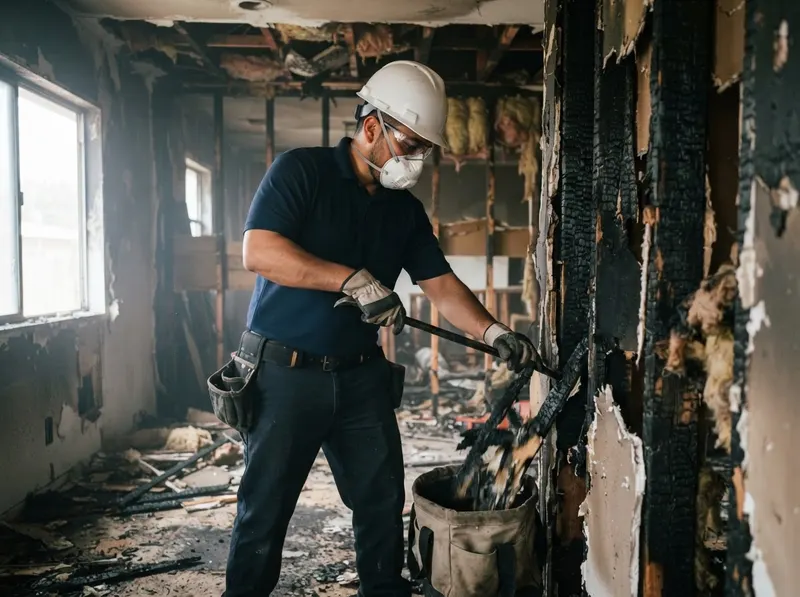
Severely burned gypsum board, melted thermal insulation, and compromised flooring act as persistent reservoirs of smoke odor and structural instability. Controlled selective demolition systematically strips non-salvageable architectural assemblies down to structurally sound framing, utilizing negative pressure containment chambers to prevent toxic soot dust from cross-contaminating unaffected living areas. Skilled containment crews isolate work zones with 6-mil fire-retardant poly sheeting and negative-air HEPA exhaust units, meticulously cutting back charred building sections along exact framing centerlines. Debris is sealed in heavy containment bags on site and moved through controlled transit pathways to prevent loose soot deposition throughout preserved building corridors.
Get a quote →You get a firm, itemized quote for your fire damage restoration before any work begins, no surprises, no pressure.
Careful prep, tidy work, and a full cleanup when we are done. We treat your home and belongings like our own.
The same trusted, background-checked team from the first call to the final check.
Property recovery decisions depend heavily on the severity of the burn pattern, the volume of extinguishing water, and the specific materials affected across the premises. If your building suffered concentrated framing charring and roof penetrations from direct thermal exposure, choose emergency structural board-up, load-bearing shoring, and heavy-duty roof tarping to prevent total envelope collapse and weather infiltration. If the primary damage stems from smothered synthetic materials or electrical smoldering that left pervasive, oily soot without major frame loss, select targeted chemical soot washing, ultrasonic content cleaning, and hydroxyl thermal fogging.
The fundamental trade-off centers on restoration speed versus material salvageability: aggressively stripping drywall and insulation down to bare framing resolves contamination rapidly and guarantees complete hidden-pocket odor elimination, whereas detailed in-place dry ice blasting and chemical sponge cleaning saves historic or custom structural timber at the expense of longer containment and drying timelines. When municipal water suppression has inundated multiple floor levels, opting for rapid floor cavity drying and controlled lower-wall flood cuts prevents microbial expansion within 48 hours, while attempting to dry saturated plaster or insulated double walls in place risks hidden fungal growth and enduring structural odor traps. For multi-family residential structures or light commercial complexes, choosing complete negative air isolation and zoned mechanical air scrubbing allows unaffected zones to remain structurally preserved without toxic cross-contamination, trading minor operational reconfiguration for significantly lower total reconstruction expenses.
Contact First Fire Damage Restoration at (424) 540-2182 to schedule an on-site structural assessment or text a photo of your property's exterior and interior framing damage directly for rapid triage support.
Every project gets a firm, written price after a free on-site visit. Ranges below for orientation.
Tell us about your fire damage restoration job and we'll send a clear, written quote, usually the same day. Or just call and talk to a real los angeles pro.
(424) 540-2182
Los Angeles properties face distinct fire hazards driven by severe seasonal Santa Ana winds funneling through mountain passes between September and January, dramatically escalating exterior wildfire risks across brush-adjacent hillside enclaves. Wind-driven embers from brush corridors near Griffith Observatory, Elysian Park, and the Sepulveda Basin Recreation Area frequently ignite exterior roof eaves and wooden framing assemblies in neighborhoods like Pacific Palisades, Brentwood, Woodland Hills, and Sherman Oaks. In dense multi-family urban corridors like Koreatown, dense vintage housing stock in Silver Lake, and historic Craftsman properties in Highland Park and Mount Washington, aging knob-and-tube electrical wiring and high-density grease flare-ups present substantial residential structural fire challenges. The architectural variety across Los Angeles County, from hillside stilt homes along steep canyon passes to mid-century modern slab homes near La Brea Tar Pits and dense residential communities surrounding Dodger Stadium, demands customized mitigation engineering. Hillside structures require specialized access strategies for heavy desiccant dehumidifiers, high-capacity water extraction hoses, and timber shoring equipment along narrow, winding canyon roadways where municipal emergency vehicle access is tightly constrained. First Fire Damage Restoration understands the precise engineering, local environmental mitigation ordinances, and microclimatic factors unique to the region, coordinating rapid property stabilization directly with municipal authorities, local building inspection departments, and insurance adjusters.
Free estimates for los angeles & the surrounding area.
 First Fire Damage Restoration